Yorkshire is one of the most productive regions for heavy metal in the history of the genre, home to founding New Wave of British Heavy Metal acts like Saxon and Def Leppard, pioneering gothic and doom bands including Paradise Lost and My Dying Bride, and a working pub circuit that still sustains new bands today. If you're trying to understand why the North of England keeps producing loud, serious, long-lasting metal acts, the answer is mostly industrial geography, cheap beer, and nowhere better to be on a Friday night.
The founding acts
Saxon formed in Barnsley in 1976 and became one of the defining bands of the New Wave of British Heavy Metal alongside Iron Maiden, Judas Priest, and Motörhead. Wheels of Steel, Strong Arm of the Law, and Denim and Leather set the template for a kind of working-class British metal that took itself seriously without ever quite losing the sense that it was all a bit daft. The band is still touring.
Def Leppard came out of Sheffield in 1977 and eventually sold tens of millions of records, though the earlier material (Hysteria, Pyromania, High 'n' Dry) is the part most metal fans care about. Their origin is pure Yorkshire pub rock, even if the polished later sound ended up closer to stadium pop.
Paradise Lost formed in Halifax in 1988 and essentially invented gothic metal. The early albums, Gothic and Icon and Draconian Times, influenced a generation of European metal bands and remain touchstones of the genre. They're still active.
My Dying Bride formed in Bradford in 1990 and became one of the defining acts of death-doom, a subgenre most of the world didn't know existed until they made it. Their 1995 album The Angel and the Dark River is widely cited as one of the most important British metal records of the nineties.
That's four hugely influential bands within a 30-mile radius. It's not normal. Most UK regions haven't produced one.
Why Yorkshire became a metal region
Three factors, all of them boring and structural.
Industry. Sheffield, Rotherham, Barnsley, Bradford, and Leeds were steel, mining, and textile towns. Loud music about working-class anger, mythology, and escape had a natural audience in places where the day job was physically exhausting and the pub was where you processed the week. Metal spoke to people whose lives were already loud.
Venues. Working men's clubs, pubs with function rooms, and town hall back rooms gave young bands somewhere to play for a fee and a couple of drinks. The infrastructure was already there, built for cabaret and weddings, and it adapted to rock and metal without much friction. That infrastructure still exists in reduced form and still hosts gigs.
Distance from London. Yorkshire bands couldn't rely on being discovered at a label showcase in Camden, so they built regional followings the hard way by gigging. That tends to produce better live acts. Bands that have to earn their audience one Wednesday-night pub gig at a time sound different to bands that have an A&R department warming up the crowd for them.
The scene today
The Yorkshire metal circuit is still active. Venues like The Duck and Drake in Leeds, The Yorkshireman in Sheffield, Jasper's Bar in Pontefract, and the Keighley Picture House run regular rock and metal nights. Festivals like the Yorkshire Rock and Bike Show in Leeds pull substantial crowds every year. Touring tribute acts, emerging local bands, and the occasional returning legend all play the same rooms, often in the same week.
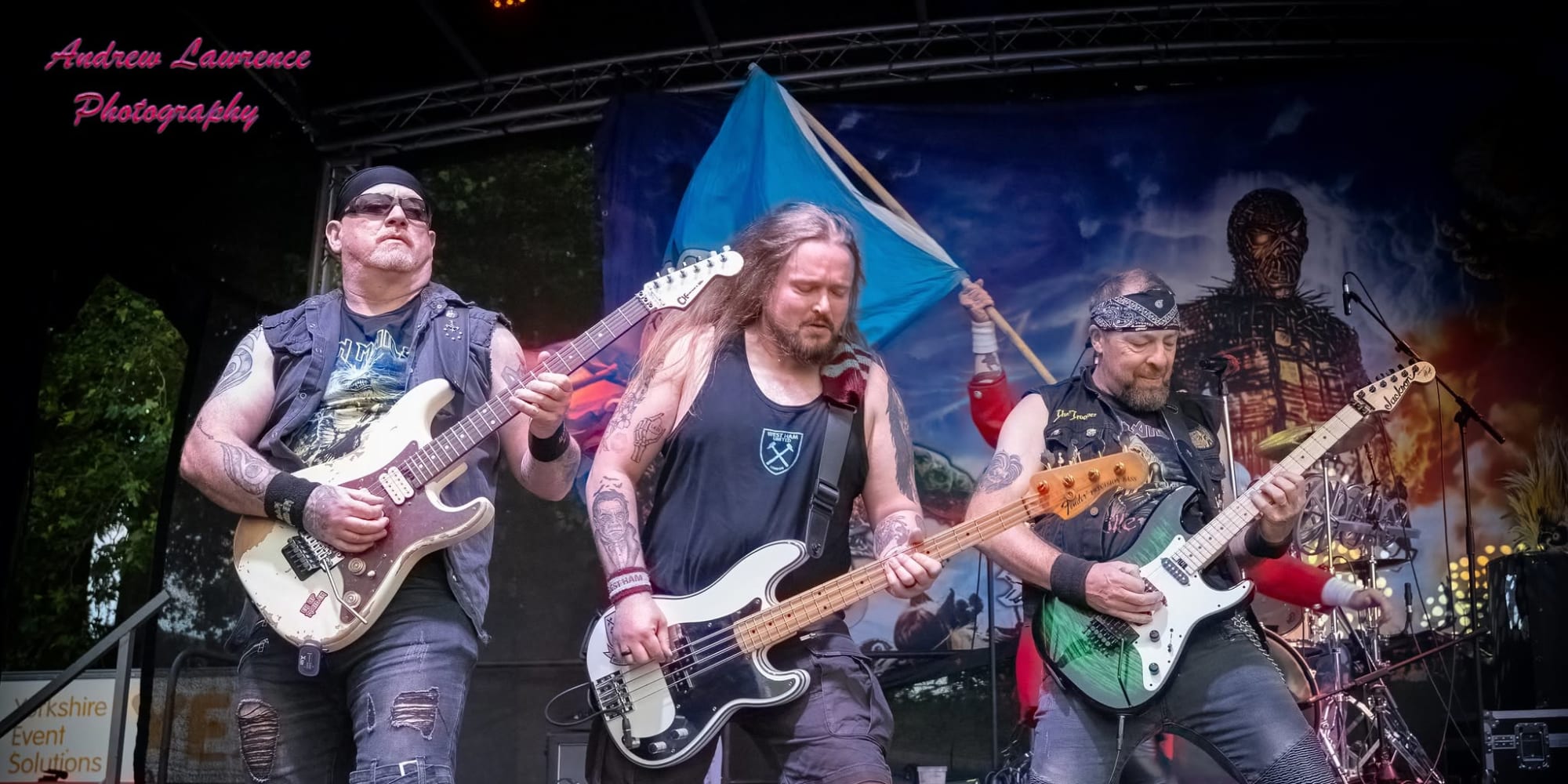
We are part of that tradition. Ey Up Maiden formed in Yorkshire specifically to carry Iron Maiden's catalogue into the same pub and club venues the original NWOBHM scene grew out of. Not because Iron Maiden were Yorkshire (they weren't, they were East London), but because the audience for the music is still here, and the rooms to play it in are still open.
If you want to see what Yorkshire metal looks like now, our tour dates are a starting point. We play most of the venues mentioned above on rotation.
Frequently asked questions
What's the most famous heavy metal band from Yorkshire?
Def Leppard from Sheffield are commercially the biggest, with well over 100 million records sold globally. Saxon from Barnsley are arguably more influential within the metal genre itself.
Is there a Yorkshire metal festival?
Several. The Yorkshire Rock and Bike Show in Leeds, Bloodstock Open Air at Catton Park (technically just over the border in Derbyshire but drawing heavily on Yorkshire audiences), and various smaller pub and club-circuit weekenders run throughout the year.
Which Yorkshire town has the best metal scene?
Leeds has the most active live circuit, with venues including The Duck and Drake hosting regular rock and metal gigs. Sheffield, Bradford, and Huddersfield also have established scenes.
Where does Ey Up Maiden fit into Yorkshire metal?
We're a Yorkshire-based Iron Maiden tribute band that plays the traditional pub and club circuit across the North. Our full schedule is here.
Last updated: 3 April 2026.


